
Best Books For 6 Year Old Boy: Top Picks!
Best books for 6 year old boy - Find the best books for 6 year old boy with our 2026 expert guide. Discover engaging themes, ideal reading levels, and personali


You’re probably here because you’ve stood in front of a shelf of children’s books and thought, “How am I supposed to choose just one?” Some covers look funny, some look educational, some seem far too babyish, and others feel a bit too difficult. For many parents, grandparents, and godparents, buying a book for a six-year-old boy feels oddly high-stakes.
That feeling makes sense. At six, many boys are still enjoying being read to, but they’re also starting to want some independence. They want stories that feel exciting, funny, clever, and a little bit like them. The right book can open a door. The wrong one can sit untouched on a shelf.
So instead of giving you a random list and sending you off to guess, let’s make this easier. I’ll walk you through how six-year-olds read, what kinds of books tend to pull them in, and how to choose a book that matches your child rather than a trend. If you’re also thinking about the wider birthday moment, some families find it helpful to pair a story gift with something personal, such as this guide on finding a perfect card for a toddler, especially when you want the whole gift to feel thoughtful and age-appropriate.
Choosing a Book for a 6-Year-Old Boy Is Not Child's Play
A parent once told me she spent twenty minutes in a bookshop picking up books, reading the backs, putting them down, then picking up the same three again. Her son loved jokes, sharks, and anything involving a chase. She left with a book that looked “sensible” and beautifully written. He listened once, politely, then wandered off halfway through the second reading.
The problem wasn’t the book. The problem was the match.
At six, children change quickly. One week they want silly stories and repeated catchphrases. The next, they want facts about volcanoes, football stickers, or a story about a child solving a mystery with a torch under the bedcovers. A six-year-old boy can still love a picture book and also be ready for an early reader. He may want to hear the same story every night, yet suddenly insist on sounding out words by himself.
Why this age matters so much
Six is a hinge age. Children are moving from “books happen to me” to “I can do some of this myself.”
That shift matters because confidence grows through success. If a book feels welcoming, he stays with it longer. If it feels flat, preachy, or too hard, he may decide reading isn’t really for him.
A good book for a six-year-old boy doesn’t just match his age. It matches his energy, attention, and sense of humour.
There’s another reason careful choosing matters. UK reading statistics from the 2024/25 academic year reveal a significant gender gap, with only 68% of boys meeting the expected reading standard in Key Stage 1 compared to 78% of girls, according to Department for Education data, a point highlighted in this article on books for 6 to 8 year old boys. That doesn’t mean boys can’t thrive as readers. It means they often need books that strongly engage them.
What helps most
When families ask me about the best books for 6 year old boy, I suggest three starting questions:
- What does he already love? Animals, machines, football, pirates, maps, jokes, facts, monsters?
- How does he like to listen? Calm cuddle-up stories, lively read-alouds, or fast page-turners?
- What kind of challenge suits him today? Familiar words, a slight stretch, or something for shared reading together?
That’s where significant progress begins.
Understanding Your 6-Year-Old's Reading Brain

A six-year-old’s reading brain is a bit like a child building with bricks. First come the small pieces. Sounds. Then short words. Then sentences. Then whole stories that mean something.
Parents sometimes get confused because a child can seem fluent one day and tired the next. That’s normal. Reading at six isn’t a straight line.
From sounding out to meaning-making
Many six-year-olds are still doing two jobs at once.
First, they’re working out the words on the page. Second, they’re trying to hold on to the meaning of the sentence. That’s a lot of mental effort. If all their energy goes into decoding, they may not fully enjoy the story.
Think of it this way:
- Letters are the bricks
- Words are the walls
- Sentences are the rooms
- The full story is the house
If the early bricks aren’t steady yet, the house can wobble. That’s why simple language, repeated patterns, and strong illustrations still matter at six.
Pictures still do serious work
Some adults think a child should move on from picture books once he starts school. I wouldn’t rush that at all.
Illustrations help children:
- Predict what’s happening
- Check if they’ve understood a word correctly
- Follow emotion and action
- Stay engaged when text becomes harder
A child who looks closely at pictures isn’t avoiding reading. He’s using every clue available to make meaning.
Practical rule: If a book’s pictures help your child tell the story back to you, the book is doing excellent work.
What six-year-olds often understand now
By this age, many boys can follow more than “this happened, then this happened.” They can usually start noticing motives and feelings.
For example, they may understand:
- a character hid something because he felt embarrassed
- a friend lied because she was worried
- the funny part of a story comes from surprise, not just noise
This is why stories about friendship, bravery, mistakes, and trying again can land so well at six. They’re beginning to see the world from inside another person’s point of view.
Why book choice matters
Some boys need movement and humour to stay with a story. Others love facts woven into a narrative. Some need short chapters because finishing a chunk feels satisfying. The book needs to fit the child’s current reading brain, not the version adults wish he had.
A useful way to spot a good fit is to watch what happens after page two. Does he lean in, interrupt with questions, laugh, predict, point, or ask for another page? Those are strong signs that the book is at the right level of challenge and interest.
The Best Genres and Themes to Captivate His Imagination
If you want to choose well, don’t start with a title. Start with a type of story.
That’s often the missing piece. Parents search for the best books for 6 year old boy, but what really helps is knowing which genres tend to draw six-year-olds in and why.
Adventure stories
Adventure gives a child a reason to keep turning the page. Someone is searching, escaping, solving, climbing, rescuing, or finding.
These stories work especially well for boys who like momentum. They also support reading stamina because there’s a natural urge to find out what happens next. A short quest, a missing object, a map, or a problem to solve can all do this job.
Adventure plots often help children practise:
- sequencing
- prediction
- cause and effect
- staying with a story over several pages
If your child loves secret codes, missions, clues, or sneaky plans, he may also enjoy story ideas like those featured in this piece on spy books for kids.
Humorous books
Humour is not a bonus. For many six-year-olds, it’s the doorway.
Silly misunderstandings, exaggerated characters, funny sounds, repeated punchlines, and playful language all help children join in. When a child already knows the funny bit is coming, he often starts reading or reciting it with confidence.
Look for books with:
- surprising endings
- repeated phrases
- visual jokes in the illustrations
- mild mischief rather than harsh sarcasm
A child who laughs is usually paying close attention.
Non-fiction and STEM-flavoured books
Some boys don’t fall for story-first books straight away. They want facts. They want diagrams. They want to know how volcanoes erupt, how diggers work, or what lives under the sea.
That interest is valuable. According to Book Trust's 2024 Reading Habit Index, exposing 6-year-old boys to STEM-themed books correlates with a 31% improvement in spatial reasoning scores, as noted in this piece on top books for children aged 6. In plain terms, some genres don’t just hold attention. They also support thinking skills.
Stories about friendship and feelings
These can be easy to overlook because they may seem quieter. But six-year-olds are doing a huge amount of social learning.
Books about:
- falling out and making up
- feeling left out
- trying something new
- being scared and carrying on
- learning to share space and attention
help children make sense of daily life. The emotional lesson doesn’t need to be heavy-handed. In fact, it’s usually better when it’s woven naturally into the plot.
A strong children’s book teaches without sounding like it’s teaching.
A quick matching guide
| If he loves... | Look for... | Why it helps |
|---|---|---|
| movement and excitement | quests, rescues, mysteries | keeps him engaged across pages |
| jokes and silliness | repeating patterns, comic surprises | builds confidence through anticipation |
| facts and systems | vehicles, animals, space, inventions | connects reading to real curiosity |
| people and relationships | friendship stories, school stories | supports emotional understanding |
The smartest choice isn’t the most famous book. It’s the one that meets the child where he already is.
How to Select the Perfect Book Every Time

You don’t need a teaching qualification to pick well. You need a simple filter.
When I help families choose a book, I use three checks. Interest. Level. Feel. If a book passes those, it usually has a very good chance.
Start with interest
Children rarely choose books the way adults do. Adults ask, “Is this worthwhile?” Children ask, “Do I want to open it?”
That’s why interest comes first.
Try these prompts:
- What does he talk about without being asked?
- What does he pretend to be during play?
- Which television characters, games, or real-world topics grab him?
If he’s obsessed with football, don’t fight that. If he loves sharks, take the shark book. If he wants jokes, start there. Reading grows from engagement, not from adult ideals.
Use the five-finger check gently
Open the book to a page in the middle and read together.
If he can read most of it comfortably, it may suit independent reading. If there are several tricky words and he starts to lose the thread, it may be better as a shared book. Neither outcome is a problem.
Here’s the key: don’t use level as a way to reject a great book. Use it to decide how the book will be enjoyed.
Some books are “read by me”. Some are “read with me”. Both count.
Check the feel of the book
This is the part adults skip, yet children notice it immediately.
Ask yourself:
- Do the illustrations invite him in?
- Is the page crowded or clear?
- Is the font easy to follow?
- Are the chapters or sections short enough to feel manageable?
- Does the cover promise the sort of experience he likes?
A beautifully written book can still be the wrong shape for a particular child. Some six-year-olds need white space, visual support, and quick wins.
A simple bookshop framework
Use this when you’re browsing.
-
Interest match Does the subject connect with something he already loves?
-
Reading match Can he access at least part of it without frustration, or enjoy it happily with an adult?
-
Emotional match Is the tone right for him? Funny, reassuring, exciting, gentle, curious?
-
Visual match Do the pictures and layout support, not overwhelm?
Sometimes this kind of decision-making overlaps with other gift choices too. Families who like practical frameworks often enjoy this guide to choosing the best board games for kids, because the same principle applies. Match the child, not just the age label.
What to avoid
A few common mistakes make book-giving harder than it needs to be.
-
Buying for the child you wish he was If he loves fact books, don’t force a dreamy classic first.
-
Choosing only by age on the cover Age bands are rough guides, not guarantees.
-
Assuming longer means better A shorter book that gets reread is often more valuable than a long one that feels heavy.
-
Rejecting repetition Re-reading is one of the ways children become fluent and confident.
The best selector is not the person with the longest list. It’s the adult who notices the child in front of them.
Making Reading an Adventure Not a Chore
A good book helps. The way you share it matters just as much.
If reading starts to feel like a test, many children pull away. If it feels like closeness, play, and discovery, they come back to it. That difference is enormous at six.
Turn story time into a shared mission
Children this age respond brilliantly to small rituals.
You don’t need a fancy setup. A blanket, a chair by the window, a torch for evening stories, or a “book basket” beside the sofa can be enough to signal that reading is something special.
Try simple habits like:
- Letting him choose first even if the book seems odd to you
- Using voices for one or two characters
- Pausing to predict what might happen next
- Acting out one scene after reading
- Spotting favourite words and saying them together
These aren’t tricks. They’re ways of helping a child stay emotionally connected to the book.
Why reading together still matters
At six, some children want to prove they can read alone. That’s lovely. Keep reading with them anyway.
UK National Literacy Trust data shows that 6-year-old boys who read daily with a parent exhibit 24% higher vocabulary acquisition rates, linked in this article on books for boys aged 6 to 8. Shared reading gives children access to richer language than they could usually manage independently.
That means a child can enjoy bigger ideas, stronger vocabulary, and more complex stories before he can read every word himself.
Reading together tells a child, “Books are a place we go together,” not “Books are a task you must complete.”
Small changes that make a big difference
If your child resists reading, don’t rush to “try harder.” Adjust the experience first.
A few useful shifts:
- Keep sessions short if attention is low
- Stop while it’s still going well so he wants another turn tomorrow
- Re-read favourites without apologising for it
- Follow curiosity even when it leads to maps, labels, or joke books rather than storybooks
Reading is not one narrow activity. It’s a relationship with language, ideas, and pleasure.
For some boys, that relationship begins with one hilarious page. For others, it begins with a fact about excavators. Both are real reading lives.
The Ultimate Gift A Story Starring Him

Sometimes the strongest reading invitation is the most personal one of all. A child opens a book and realises, “That’s me.”
For many six-year-olds, that changes everything. The story stops being something at a distance. It becomes immediate. He’s not observing the adventure. He’s inside it.
Why personalisation can work so well
Children at six are developing identity very actively. They’re asking themselves who they are, what they can do, and where they fit. A story that reflects them back as capable, brave, curious, or kind can be very powerful.
According to a National Literacy Trust report, boys who engage with personalised books show a 25% higher likelihood of developing reading fluency by age 7, and custom stories have been found to increase reading enjoyment by 35% among 5-7-year-olds, as summarised in this article on data and books for kids.
That doesn’t mean every child needs only personalised stories. It means personal relevance can be a strong doorway into reading.
What to look for in a personalised book
Not all personalised books feel equally meaningful. The strongest ones usually do more than drop a child’s name into a sentence.
Look for:
- a story with a clear plot, not just a novelty effect
- illustrations that feel warm and engaging
- themes a six-year-old can connect to, such as adventure, discovery, kindness, or confidence
- a format that adults can enjoy reading aloud more than once
If you want to see how this kind of gift can work through a platform rather than making something manually, this article on how to make your own childrens book gives useful context around the idea.
One practical example
One option parents and relatives use is Storyfam. Through its platform, a parent, grandparent, aunt, uncle, or other loved one uploads a photo of the child, adds the child’s name and age, chooses a story, and includes a dedication that appears at the beginning of the book. The photo is automatically deleted once the book is created. The books are printed and illustrated in France on environmentally respectful premium paper.
That sort of format can work especially well for children who need an extra nudge to feel that books belong to them.
When a child sees himself as the main character, reading can feel less like practice and more like recognition.
A personalised book also works beautifully as a keepsake. At six, children still delight in the magic of “I’m in the story,” but they’re also old enough to remember it.
Your Role in Nurturing a Lifelong Reader

A child doesn’t become a reader because adults buy the “right” book once. He becomes a reader because the adults around him keep helping him meet books that feel rewarding.
That’s good news, because it takes the pressure off perfection. You don’t need to create a flawless literary education. You need to notice, respond, and keep the door open.
What matters most over time
The children who grow into steady readers usually have a few things in common. Someone pays attention to what they enjoy. Someone reads with them. Someone treats books as part of ordinary family life.
That can look like:
- library visits that feel relaxed, not test-like
- bedtime reading even when a child can decode independently
- giving joke books, fact books, comics, and stories equal respect
- choosing books that fit the child’s stage, not just his age
Analysis shows that adventure books can increase a boy's reading stamina by as much as 28%, as noted in this article on top kids books and reading progress. That’s a helpful reminder that genre choice isn’t trivial. A well-matched book can help a child stay with reading for longer.
The long view
Some weeks, your child will seem obsessed with one kind of book. Other weeks, nothing will land. That doesn’t mean you’re doing it wrong.
Reading development is often uneven. Confidence can leap forward in one area and wobble in another. Interest can change fast. What matters is that books remain associated with warmth, curiosity, and possibility.
If you enjoy giving stories that also strengthen connection, some families like exploring ideas such as a daddy and me book, where reading and relationship sit side by side.
The true gift isn’t just the book. It’s the message behind it. “Your thoughts matter. Your imagination matters. Your voice matters.”
That message stays with a child for a very long time.
If you want to give a six-year-old a story that feels personal as well as memorable, Storyfam offers personalised children’s books that place the child at the centre of the adventure. It’s a thoughtful option for birthdays, Christmas, or any moment when you want a gift that invites reading, imagination, and connection.
Create your personalized book
Your child becomes the hero of their own illustrated story. Free preview before you order.
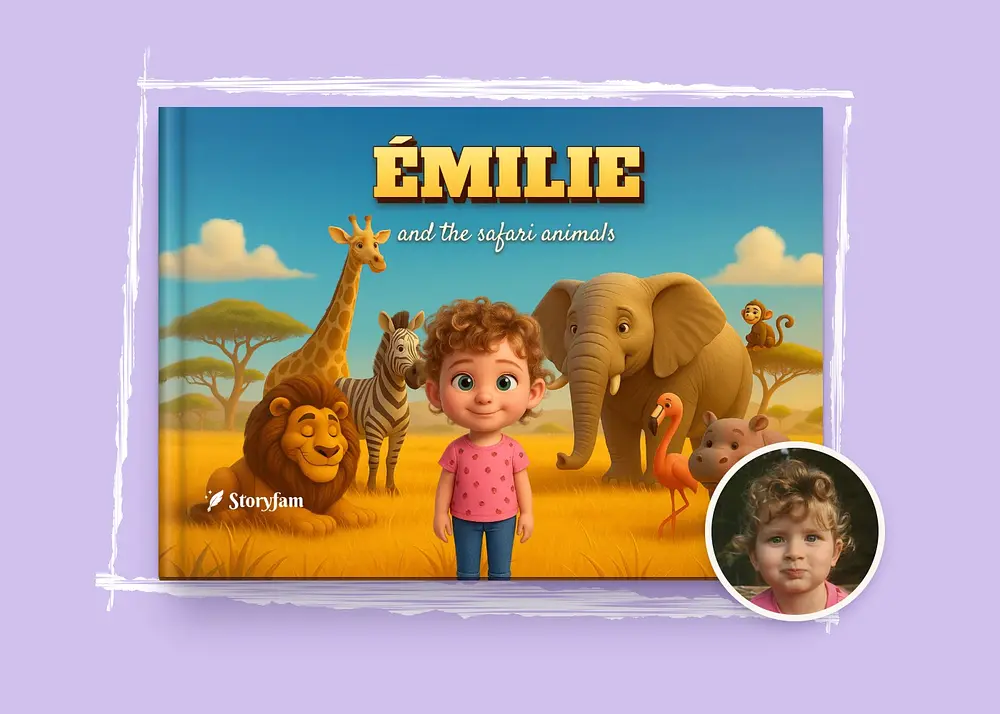

The extraordinary safari
A magical safari where your child meets 7 animals and discovers the keys to friendship through play and tenderness.
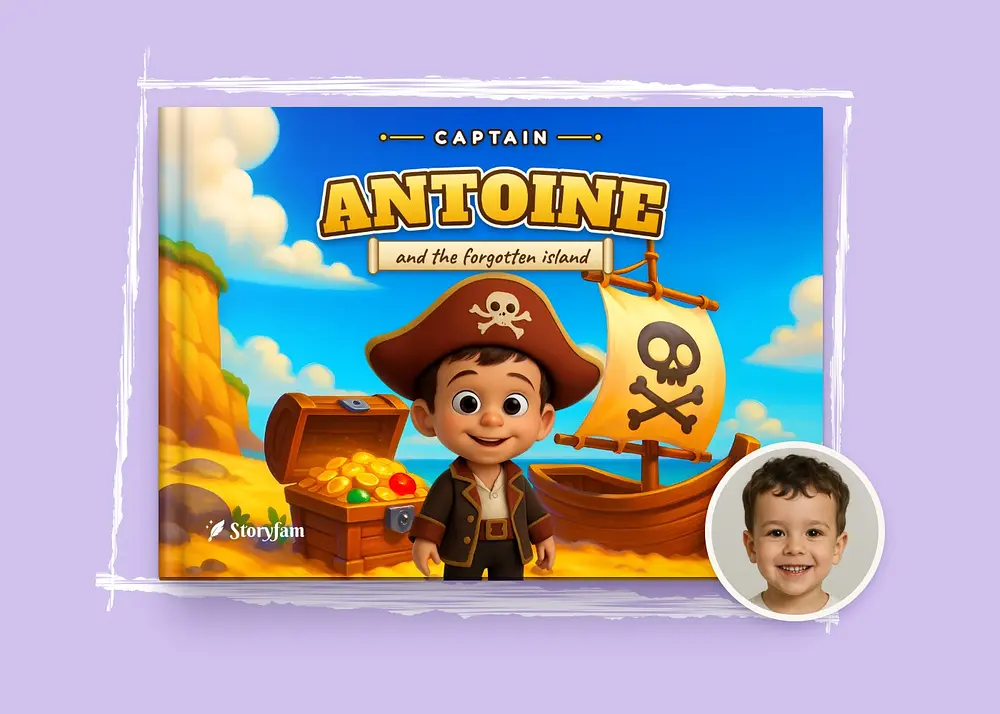
The forgotten island of pirates
A thrilling adventure on a mysterious island where pirates have hidden their treasure. Join our young hero on his quest to discover the secrets of the forgotten island.
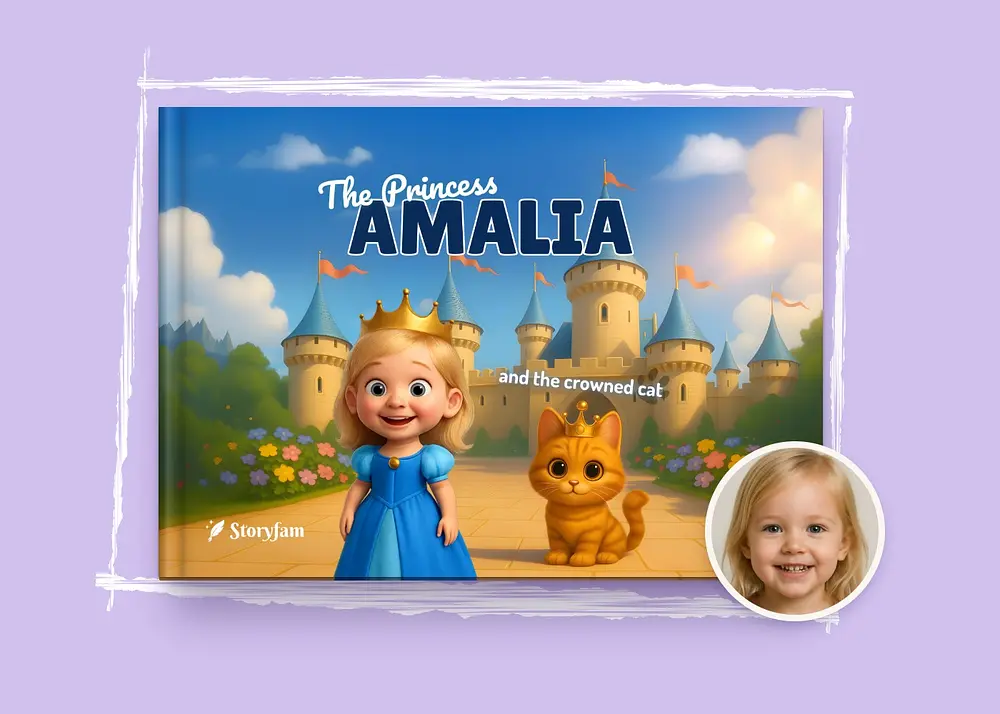
The princess and the cat
A mysterious cat wearing a small crown leads the princess into an enchanted kingdom where animals talk and every encounter becomes a magical adventure.
About the author

Robeen Simeon
CEO & Founder of Storyfam — Founder of Storyfam, passionate about family reading
Robeen Simeon is the founder and CEO of Storyfam. A committed father, he founded Storyfam to help parents and grandparents pass on the love of reading to children through personalized books. He leads the editorial direction of the Storyfam blog and ensures the quality, accuracy and relevance of every article published.


