
8 Happy Birthday Wishes for Children: The Perfect Words
Struggling for words? Find unique happy birthday wishes for children. Discover heartfelt, funny, and creative messages for cards, with tips to personalise them.


What do you write in a child’s birthday card when “Happy Birthday” feels too small?
That is the moment many people get stuck. You know you love the child. You know you want your words to feel warm, joyful, and memorable. But once the card is open, the message can suddenly feel oddly hard to write. A simple line is fine, of course, yet many of us want to say a little more. We want to reflect who that child is right now. We want to honour their spark, their quirks, their growth, and the delight they bring to the people around them.
A birthday wish can do more than fill space on a card. It can become a tiny keepsake. Years later, a child might hear it read aloud again or find it tucked inside a memory box and feel loved all over again. That is why thoughtful happy birthday wishes for children matter. They help turn a lovely day into a lasting memory.
The good news is that you do not need to be poetic, funny, or naturally “good with words” to write something meaningful. You only need a simple approach.
Below are eight different ways to shape a birthday message. Each one gives you a small framework, easy tips, and examples you can adapt. Some are playful. Some are tender. Some are rooted in family, learning, or identity. Pick the one that fits the child best, then make it your own.
1. The Personalised Adventure Message

Some children light up the moment they hear a story begin. If that sounds like your birthday child, turn your message into an adventure.
Instead of writing a flat greeting, write as if the child is setting off on a special mission. Use their name, age, favourite things, and a few familiar details. Suddenly, the card feels less like a note and more like the first page of a story.
“Dear Theo, happy birthday. Today you are 5, and that means your next great adventure begins. With your brave heart, your dinosaur knowledge, and your speedy running feet, you are ready to explore new places, make big discoveries, and fill this year with fun.”
That works because it feels personal. It places the child at the centre.
How to make it feel real
Pick two or three details that belong only to them. Maybe they love yellow diggers, dancing in the kitchen, or spotting birds in the garden. Add one small achievement from the past year too.
You could write:
Happy birthday, Mila. You are 4 today, and your adventure bag is already full of treasures: your kind smile, your love of ladybirds, and your brilliant imagination.
A grandparent might write about baking together. An aunt might mention a park trip. A parent might mention bedtime stories and muddy boots.
A nice pairing for this style is a memory-rich gift that keeps the child in the centre of the story, such as a personalised book of memories.
A simple formula
- Start with the age: “Today you turn 6.”
- Name their strengths: “You are curious, brave, and kind.”
- Add adventure language: “Your new journey begins.”
- End with hope: “I cannot wait to see where this year takes you.”
This approach works especially well for younger children because grown-ups can read it aloud with energy and expression.
2. The Growth and Confidence Affirmation Message

A birthday is a natural moment to reflect on how much a child has grown. Not just in height, but in confidence, kindness, patience, humour, and courage.
This kind of message is gentle and uplifting. It tells the child, “I see who you are becoming.”
“Happy birthday, Ava. This year you have become so much braver. You tried new foods, made new friends, and kept going even when things felt hard. I am so proud of your kind heart and strong spirit.”
That line does more than praise. It gives the child a mirror. It helps them see their own progress.
What to praise
The best affirmations are specific. Instead of saying, “You are amazing,” say what you have noticed.
- Kindness: “You always make space for others.”
- Bravery: “You gave swimming lessons a go even when you were unsure.”
- Creativity: “Your drawings and stories are full of life.”
- Persistence: “You keep trying, even when something is tricky.”
A preschool child may not fully understand every word today. Still, the tone matters. Repeated over time, these messages can become part of how they see themselves.
Choose simple praise that points to character, not only performance. “You are thoughtful” often lasts longer than “You are clever.”
This style can also be especially meaningful for children who need encouragement that honours their own pace. In the UK, 1.5 million pupils in state-funded schools have special educational needs, equal to 17.9% of the pupil population as of January 2025, which is a useful reminder that birthday messages do not need to focus on conventional milestones. A child may need words that celebrate effort, joy, resilience, and the way they move through the world in their own way.
3. The Magical Milestone Message

A new age can feel ordinary to adults. To a child, it can feel huge. That is why a milestone message works so well when you lean into the magic of becoming “four” or “five” or “six”.
Write as if the birthday child has unlocked a new world.
“Welcome to the magical age of 5. The gates to the Five-Year-Old Kingdom are open, and only special children may enter. Inside are new adventures, big laughs, brave moments, and wonderful discoveries.”
There is no need to overcomplicate it. Children respond to tone and imagery. The idea that their birthday means entry into a secret club or enchanted place is often enough to make them beam.
Turn age into a story event
You can make the age sound important in a playful way:
- Age 3: the year of little explorers
- Age 4: the year of bigger questions
- Age 5: the year of magical confidence
- Age 6: the year of bold new discoveries
A parent might tuck this message beside a birthday breakfast. A grandparent might write it inside the front cover of a gift book. A teacher might use it in a birthday certificate for the classroom.
Try a line like this:
Happy birthday, Sam. Today you enter the brilliant world of 4-year-olds, where giggles are powerful, imagination is endless, and every day holds a new surprise.
Children love ritual. You can make the message even more memorable by adding a tiny ceremony. A paper crown, a “welcome to age 5” badge, or a special bedtime reading can make the words feel real.
This approach is especially lovely when the child already loves fairy tales, pretend play, or magical worlds.
4. The Family Legacy and Continuity Message

Some birthday messages feel strongest when they root a child in something bigger than the day itself. Family messages do that beautifully.
This style reminds the child that they belong to a long story. It links them to shared traits, traditions, and love passed across generations.
“Happy birthday, Elsie. You carry so much of our family’s warmth with you. You have Grandpa’s cheerful laugh, Mum’s gentle heart, and your own bright, curious way of seeing the world. We are so happy to watch your story grow.”
This kind of message suits parents, grandparents, godparents, and close relatives especially well.
What to include
You do not need a grand family history. One or two honest links are enough.
- A family trait: kindness, humour, determination, creativity
- A tradition: birthday pancakes, a special song, a yearly photo
- A sense of belonging: “You are part of us, and we are proud of you”
For example:
“Today we celebrate not only your birthday, but another beautiful chapter in our family story. We will keep cheering you on, laughing with you, and making memories together.”
This can be very moving when written by an old relative. In many families, birthday cards become unofficial archives. They preserve how a child was seen at a certain age.
If you want a keepsake feeling, write as if the child may read it again in ten or twenty years. Keep it simple, but sincere. Children may first hear the warmth. Later, they may understand the depth.
5. The Discovery and Learning Message
Curious children give you plenty to work with. They ask “why”, collect facts, spot patterns, test ideas, and surprise adults with what they notice. A birthday message can celebrate that learning spirit without sounding formal or school-like.
“Happy birthday, Arlo. This year you learned so much. You counted with confidence, noticed tiny bugs in the garden, and asked the most thoughtful questions. I love the way you explore the world.”
That kind of message says, “Your curiosity matters.”
Focus on discoveries, not pressure
The aim is not to list achievements like a report. It is to celebrate learning as joy.
A few lovely things to mention:
- Practical learning: putting on shoes, helping to bake, tidying toys
- Language growth: new words, funny questions, storytelling
- World knowledge: animals, seasons, vehicles, colours, shapes
- Social learning: sharing, listening, making a friend laugh
A nursery-aged child might be proud of recognising their name. A reception-aged child might be fascinated by outer space. A birthday message can reflect that excitement.
You could write:
“Happy 4th birthday, Lila. You have spent this year discovering colours, asking wonderful questions, and finding treasures everywhere from pebbles to petals. I hope your next year is filled with even more exciting things to learn.”
For children who love interactive books and little challenges, gifts that support noticing and exploring can match this message well. Story-led activity ideas such as search and find books fit naturally with this approach.
A softer educational tone
Keep the message warm. Avoid making the child feel tested or compared. You are celebrating their way of learning.
A good learning message sounds like delight, not evaluation.
This approach is a favourite for parents, teachers, and grandparents who love seeing a child’s mind open up week by week.
6. The Gratitude and Appreciation Message
Some birthday wishes are not playful at all. They are tender. They come from the strong feeling that a child has changed your life just by being in it.
This style is often best from a parent or caregiver, though a grandparent can write it beautifully too. It turns the message outward for a moment. Instead of only wishing the child a lovely day, it thanks them for the joy they bring.
“Happy birthday, my love. Thank you for your giggles, your cuddles, your questions, and the way you make ordinary days feel special. Watching you grow has been one of the greatest gifts of my life.”
There is no need to sound grand. Honest details carry the emotion.
Write for the future as well as today
A gratitude message is one the child may treasure later. Keep that in mind. Write something that will still feel true when they are older.
You might mention:
- the way they run into your arms
- the funny phrase they always say
- their care for a sibling or pet
- the way their laughter changes the mood in the home
A simple example:
“Every day with you brings something good. You remind us to slow down, notice little things, and laugh more. We are so grateful for you.”
There is also room here for quieter children, sensitive children, or children who do not always enjoy being the centre of attention. A calm, loving message can feel safer and more meaningful than a noisy one.
This style also suits a keepsake gift very well. Written inside a book or on a special dedication page, it becomes more than a card. It becomes a record of love at a particular moment in family life.
7. The Superhero and Superpowers Message
Not every powerful birthday message needs to sound sentimental. Some children respond best to fun, energy, and play. That is where the superhero style shines.
Instead of generic praise, give the child named “superpowers” based on their real strengths.
“Happy birthday, Ben. You are now an official 5-year-old superhero. Your powers include Super Smile, which cheers up everyone around you, Super Brain, which asks brilliant questions, and Super Heart, which helps you care for other people.”
That message is lively, but it still says something real.
Name powers they already use
This works best when the superpowers are grounded in actual behaviour.
- Super Kindness: notices when someone needs help
- Mega Imagination: turns cardboard boxes into castles
- Turbo Courage: tries again after wobbling
- Super Listening: pays attention to stories and people
- Joy Beam: makes the room brighter
You can turn the whole message into a mini mission:
Mission for today. Eat cake. Laugh loudly. Use your Super Kindness and Mega Imagination wherever you go.
A parent might read this aloud before the party. An uncle might add a homemade certificate. A grandparent might create a cape from a tea towel for fun.
If the child already loves capes, rescue missions, and action-packed stories, a themed gift can make the message feel even more complete. Story-led options like superhero adventures naturally match this style.
For younger children especially, this framework is brilliant because it makes confidence playful. You are not giving a lecture about self-esteem. You are helping them feel strong in language they already enjoy.
8. The Bilingual and Cultural Heritage Message
What helps a birthday wish feel like home?
For some children, the answer is language. For others, it is a family phrase, a blessing from a grandparent, or a small reference to a tradition that shows, "This is your story too." That is the heart of this approach. You are not only celebrating a birthday. You are giving the child a message that ties joy to identity.
You do not need to write the whole card in two languages. A single greeting can do a lot of work, like a familiar song that only takes a few notes to be recognised. One line in a heritage language can bring warmth, memory, and belonging into the message at once.
“Joyeux anniversaire, Inès. Happy birthday to our wonderful girl. We love the way you carry both languages with such confidence and joy.”
Or:
“Feliz cumpleaños, Mateo. We are so proud of your bright smile, your curious mind, and the love you bring to our family and our traditions.”
The key is to use what already lives in your family. Formal wording is not required. Natural wording is better.
A simple message in this style often includes one or two of these pieces:
- a birthday greeting in a heritage language
- a family saying, blessing, or nickname
- a reference to a food, song, celebration, or custom the child knows
- a line that honours grandparents, elders, or relatives far away
- a sentence that affirms a mixed, multicultural, or multilingual identity
This framework works especially well for children growing up between cultures. It tells them they do not have to choose one part of themselves over another. Their birthday message can hold the whole picture.
It also gives relatives a clear way to contribute. A grandparent can send one sentence in their first language. A parent can translate it underneath. An aunt or uncle can add a memory linked to a holiday, recipe, or family tradition. Over time, those small touches build a record of belonging the child can return to.
Personalisation matters here for another reason too. Some families struggle to find celebration language that reflects their child’s full identity and experience. For example, 62% of UK parents of disabled children say they want more customized celebration resources, according to Scope UK Disability Report 2024 as referenced in the verified brief. A birthday message that reflects culture, language, and the child’s real life can help them feel more fully seen.
If you are staring at a blank card, start small. Write one greeting from your family’s language. Add one detail only this child would recognise. Then finish with love. That simple structure often creates a message with real staying power.
8-Style Comparison of Kids Birthday Wishes
| Message Type | Implementation Complexity 🔄 | Resource Requirements ⚡ | Expected Outcomes ⭐ / 📊 | Ideal Use Cases 💡 | Key Advantages ⭐ |
|---|---|---|---|---|---|
| The Personalized Adventure Message | Medium: requires gathering personal details and narrative crafting | Moderate time to research + creative writing; optional book pairing | High engagement and emotional connection; memorable keepsake 📊 | Children 2–6 who love imaginative stories; complements personalized books | Deep personalization; immersive hero-centered experience |
| The Growth & Confidence Affirmation Message | Medium: needs specific achievements and age-appropriate phrasing | Moderate research into child's milestones; simple language work | Strong boost to self-esteem and resilience; lasting emotional impact 📊 | Parents/grandparents focused on development and values | Reinforces positive identity and growth mindset |
| The Magical Milestone Message | Medium–High: creative, fantasy-driven writing skill required | Time for creative writing and possible props/keepsakes | High wonder and excitement; Instagram-worthy moments ⭐📊 | Families who love fantasy, magical traditions, showy celebrations | Amplifies sense of occasion; highly shareable and celebratory |
| The Family Legacy & Continuity Message | High: requires family history knowledge and sensitivity | Research into family stories; possible interviews with relatives | Deep sense of belonging; multi-generational emotional resonance 📊 | Multi-generational families, milestone birthdays, heritage-focused households | Strengthens family bonds and creates heirloom-quality messaging |
| The Discovery & Learning Message | Medium: needs specific learning examples and accurate framing | Time to collect learning moments; may consult caregivers/teachers | Encourages curiosity and academic mindset; conversation starter 📊 | Educationally focused parents, teachers, young learners | Validates learning progress; supports lifelong curiosity |
| The Gratitude & Appreciation Message | Medium: demands emotional reflection and authentic tone | Quiet writing time; thoughtful memory selection | Very meaningful keepsake; high emotional resonance ⭐📊 | Emotionally expressive parents wanting a lasting keepsake | Highly personal and moving; treasured across time |
| The Superhero/Superpowers Message | Low–Medium: playful structure, needs specific strengths | Modest time to identify traits; easy to illustrate | Fun, confidence-building and immediately engaging ⭐ | Active, imaginative children who enjoy role-play and action | Energetic, easy to visualize; encourages positive self-image |
| The Bilingual/Cultural Heritage Message | High: requires language accuracy and cultural sensitivity | Translation or bilingual skills; cultural research; family input | Strengthens identity and language skills; inclusive impact 📊 | Bilingual families, expatriates, heritage-conscious households | Celebrates multicultural identity; connects extended family across languages |
Make Your Message a Keepsake They’ll Treasure
A thoughtful birthday wish does something small and powerful at the same time. It tells a child, “You matter. I know who you are. I am delighted you are here.” That is why the best messages are rarely the fanciest ones. They are the ones that feel true.
If you are still staring at a blank card, keep it simple. Choose one approach that matches the child in front of you. If they love stories, write an adventure message. If they are proud of something they learned, celebrate discovery. If your bond is especially emotional, write with gratitude. If they adore dressing up and pretending, give them superpowers. The framework does the heavy lifting. You only need to add the child.
It also helps to remember who will hear the message first. Very young children often experience birthday wishes out loud. That means rhythm matters. Warm words, short sentences, and vivid images tend to land best. Write something that sounds natural when spoken. If a parent reads it at bedtime or at the breakfast table, it should feel easy and joyful.
For many families, a birthday card is not thrown away. It is tucked into a drawer, placed in a memory box, or saved in a book. In the UK greeting cards market, individual card sales reached approximately USD 1.7 billion in 2024, showing that printed birthday traditions still hold strong meaning for families Grand View Research on the greeting cards market. That enduring appeal makes sense. Printed words can become part of family memory in a way that quick digital messages often do not.
If you want to make your words last even longer, pairing your message with a personalised keepsake can make the moment feel even more special.
A Storyfam book lets you place your birthday dedication at the beginning of a personalised story where the child appears as the hero. You upload a photo, add the child’s name and age, choose the story, and write your dedication. The photo is automatically deleted once the book is created.
Printed in France on high-quality, eco-friendly paper, Storyfam books are designed to be read, re-read, and kept. That makes them a lovely home for the kind of birthday message a child can grow into over the years.
If you want your happy birthday wishes for children to become more than a card, explore Storyfam. You can create a personalised storybook in minutes, add your own dedication at the front, and give a child a birthday gift where they are the hero from the very first page.
Create your personalized book
Your child becomes the hero of their own illustrated story. Free preview before you order.
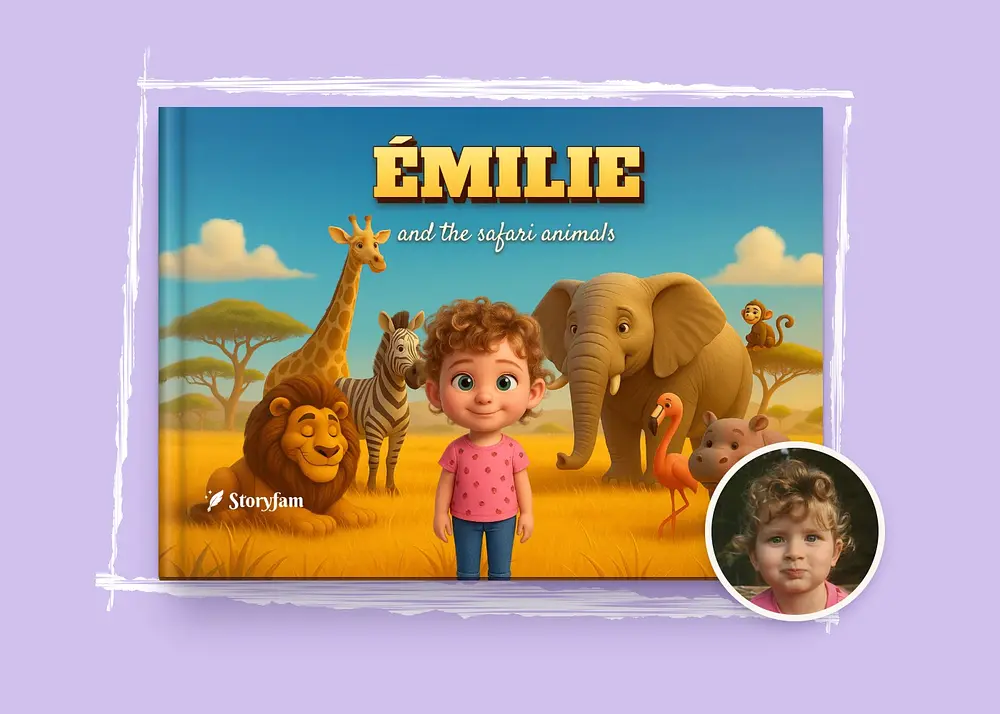

The extraordinary safari
A magical safari where your child meets 7 animals and discovers the keys to friendship through play and tenderness.
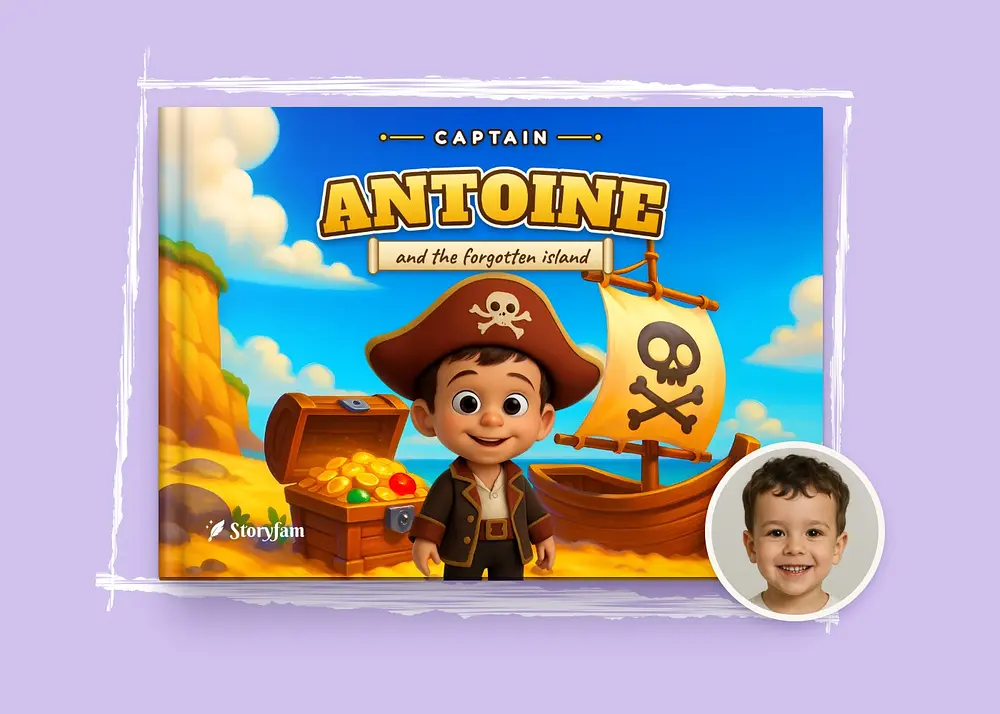
The forgotten island of pirates
A thrilling adventure on a mysterious island where pirates have hidden their treasure. Join our young hero on his quest to discover the secrets of the forgotten island.
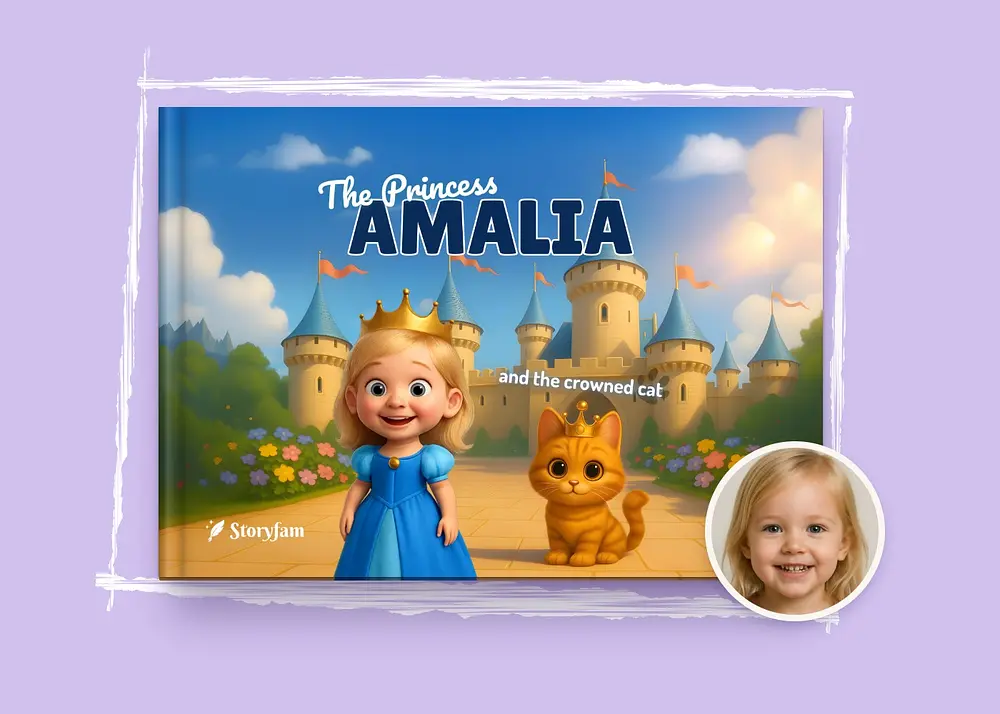
The princess and the cat
A mysterious cat wearing a small crown leads the princess into an enchanted kingdom where animals talk and every encounter becomes a magical adventure.
About the author

Robeen Simeon
CEO & Founder of Storyfam — Founder of Storyfam, passionate about family reading
Robeen Simeon is the founder and CEO of Storyfam. A committed father, he founded Storyfam to help parents and grandparents pass on the love of reading to children through personalized books. He leads the editorial direction of the Storyfam blog and ensures the quality, accuracy and relevance of every article published.


