
Personalized Story Books for Babies: More Than Just a Gift
Discover the magic of personalized story books for babies. Learn the developmental benefits and how to create a unique, eco-friendly gift with Storyfam.


You may be looking for a baby gift that feels worth keeping.
Not another toy that flashes for a week and disappears into a basket. Not another outfit that is outgrown almost immediately. You want something that says, “I know this child. I chose this for them.”
That is where personalized story books for babies can feel different. They are not just books with a name printed on the front. When they are made well, they can become part of a child’s reading life, part of a bedtime rhythm, and part of the family memory around those early years.
As an educator, I think that is what makes them special. A baby does not need a “perfect” gift. A baby needs warm voices, repeated words, familiar faces, safe materials, and stories that invite connection. A well-made personalized book can bring all of those things together in one simple object.
The Magic of Seeing Your Baby Become the Hero
A lot of parents and grandparents arrive at the same point. They want to give something meaningful, but the options feel disposable.
You can buy another soft toy. You can buy another noisy gadget. You can buy another generic baby book with a sweet message and lovely pictures. Those gifts can all be nice. But many people still feel they have not found the one item that feels personal.
That is why personalized story books for babies have such emotional pull. The baby is not just holding a book. The baby is in the story.

Why this feels so powerful
Babies and toddlers respond strongly to familiarity. They know their own routines, the sound of the voices around them, and the people who matter most. When a story reflects their own world back to them, adults often notice a different kind of attention.
A grandparent reading aloud may pause and point. “That’s you.” A parent may say the child’s name and watch for that spark of recognition. Even before a child fully understands the plot, they can enjoy the closeness, the repetition, and the feeling that the book belongs to them.
This is part of the magic. The story becomes more than entertainment. It becomes a shared family moment.
More than a novelty gift
Some people worry that a personalized book might be cute once and then forgotten. That can happen if the book is flimsy, poorly written, or only personalised in the most basic way.
But a thoughtful personalised story can become part of the bedtime shelf. It can be the book a baby reaches for because the voice is familiar and the pages feel known. It can also become a keepsake that parents save long after the nappy stage has passed.
A baby will not remember every gift. Families often remember the rituals around a beloved book.
That is often the difference. The value is not only in the object itself. The value is in the reading, the cuddling, the pointing, the naming, and the laughter that happen around it.
What makes families come back to this idea
Parents often want gifts that do two jobs at once. They want something beautiful, but also useful. They want something emotional, but not impractical.
A personalized book can meet those wishes because it can be:
- A reading tool that supports early listening and recognition
- A keepsake that marks a birth, birthday, or family milestone
- A bonding object that invites repeated shared reading
- A personal gift from a parent, grandparent, godparent, aunt, or uncle
For many families, that blend is what makes these books stand out.
Beyond the Name on the Cover
Not all personalization means the same thing.
Some older personalised books placed a child’s name into a standard story. That can still be charming. But modern personalized story books for babies often go much further, and that difference matters.
What deep personalisation looks like
Personalisation means the child is woven into the experience in several ways, not just one.
A platform might allow a loved one to:
- Upload a photo of the child
- Add the child’s first name and age
- Choose the story
- Write a dedication for the opening pages
That process changes the book from a standard printed product into something much closer to a family keepsake. The child is no longer a passing mention in the text. The story is built around them.
In practical terms, this means the adult creating the book is making choices that shape the emotional tone. The story can feel adventurous, soothing, playful, or celebratory. The dedication can mark a first birthday, welcome a new baby, or say, “We love reading with you.”
A simple comparison
| Type of book | What it usually includes | How it tends to feel |
|---|---|---|
| Basic personalised book | Child’s name added to a fixed template | Sweet, but sometimes limited |
| Highly personalised book | Name, age, image-based character, story choice, dedication | More immersive and more memorable |
This is why parents sometimes feel disappointed by one personalized book and delighted by another. The word “personalized” covers a wide range of quality.
Why the market keeps growing
Families are not imagining this interest. The category has grown into a major part of children’s gifting. The broader market data shows that Europe holds the largest market share alongside North America, and the global personalised children’s books market is valued at USD 0.73 billion in 2026 and projected to reach USD 1.5 billion by 2035, with a 10.4% CAGR from 2026 to 2035 according to Business Research Insights on the personalized children books market.
That growth tells us something useful. Families are not only buying these books because they are novel. They are choosing them because they fit real occasions and real values. People want gifts that feel individual, lasting, and emotionally resonant.
The difference a dedication makes
The dedication page is easy to overlook, but it often becomes one of the most treasured parts of the book.
A short note from Grandma. A message from Dad on a first birthday. A loving line from godparents after a christening. Years later, that page can matter as much as the story itself.
If you are choosing between two books, pay attention to the personal touches inside the front pages, not only the cover.
That is often where a personalised baby book becomes part of family history rather than just another item on a shelf.
How Personalised Stories Build a Baby's Brain
When adults hear “personalized book”, they often think first about the emotional side. That makes sense. These books are touching.
But there is another reason educators pay attention to them. Personalised stories can support early development in ways that are easy to see during everyday reading.

A useful way to understand this is to look at three areas. Language, thinking, and emotional growth.
Early language starts with recognition
Babies learn through repetition long before they can read words on a page.
When a story includes the child’s own name, adults naturally repeat it. They point to it, say it slowly, and connect it with the child’s face and actions in the pictures. That gives babies more chances to hear meaningful language in context.
Research described by Wonderbly’s article on the benefits of personalized books reports that sharing personalized stories led children to speak more and for longer, with vocabulary recall and early reading motivation improving by up to 30% compared with standard books. The same source notes that children who appear as the protagonists report 20% to 25% higher confidence in storytelling tasks.
For a parent, that may show up in very ordinary moments. A baby points. A toddler fills in a familiar word. A child starts anticipating what comes next.
Attention and memory work differently when the child is part of the story
Young children focus better when something feels personally relevant.
That does not mean every book must be about them. Shared family reading should include all kinds of stories. But personalised books can be especially useful because they offer an easy entry point. The child sees a familiar face, hears a familiar name, and stays with the page a little longer.
That extra attention matters. It gives adults more time to talk, describe, ask simple questions, and repeat key words.
If you are interested in the broader consumer side of this idea, the power of personalization in modern shopping is a helpful read. It shows why people respond so strongly to products that reflect identity and personal meaning. In baby books, that response can support learning as well as delight.
Emotional growth happens during reading too
Parents sometimes separate “learning” from “comfort”, but babies do not.
When a baby sits on a lap and hears a loving voice read a story where they are included, several things happen at once. The child experiences attention, familiarity, closeness, and positive language. Those are not extras. They are part of early development.
A personalised story can help with:
- Self-recognition through repeated use of the child’s name
- Confidence because the child is pictured as capable, loved, and included
- Connection because the adult reader often becomes more expressive and engaged
- Routine-building because children tend to request books they recognise
The strongest developmental benefit often comes from the interaction around the book, not the printed pages alone.
That point is easy to miss. A personalised book is not a magic object by itself. Its real power appears when a caring adult reads it slowly, points, pauses, smiles, and lets the child participate.
What this looks like in daily life
You do not need to run a formal literacy session. Small habits are enough.
Try this during reading:
- Pause on the child’s name and say it warmly.
- Point to the character’s face and link it to the baby.
- Repeat favourite lines with the same rhythm each time.
- Let toddlers respond with sounds, gestures, or single words.
Parents who enjoy this style of bonding often also appreciate books that celebrate a child’s relationship with a specific adult. One example is this look at a daddy and me book, which shows how personalised reading can strengthen one-to-one family connection.
The clearest lesson is simple. Babies do not need complicated stories to benefit from books. They need familiar, loving, repeated experiences. Personalization can make those experiences easier to start and easier to repeat.
Crafting Your Baby's First Great Adventure
Choosing a personalised book can feel harder than it sounds. Many adults know they want one, but then hesitate.
Should the story be calm or adventurous? Is a simple name enough? Does the child need to look like themselves in the illustrations? What matters most at this age?
Those are good questions. The easiest way to answer them is to think about the child’s stage of development rather than chasing the fanciest feature.

Start with the age, not the occasion
A newborn and a three-year-old need different things from a story.
For babies and young toddlers, look for books with soothing rhythm, simple page turns, and repetition. For older toddlers, you can add more plot and a little more adventure. The key is to avoid books that ask a very young child to follow too many twists.
Recognition often comes before comprehension. A baby may not follow the full narrative, but they can still enjoy familiar sounds, repeated phrases, and a face that feels known.
Why photo-based characters matter
There is a big difference between a generic avatar and a character that resembles the child.
For babies aged 0 to 3, some platforms now use AI-driven tools to create illustrations from an uploaded photo. According to Miotales on personalized baby books, repetitive, name-embedded stories increased recognition skills by 28% in infants in a 2023 UK study, and the effect sizes doubled when illustrations depicted the child as the protagonist.
That finding helps explain what many adults notice instinctively. When the child looks recognisably like themselves in the book, the story can feel more immediate.
A practical checklist for choosing well
Use these questions before you order.
- Does the story suit a baby’s attention span? Look for simple structure, warm language, and pages that do not feel crowded.
- Can the child’s image be integrated into the illustrations? This often creates a stronger sense of recognition than name-only personalisation.
- Is there space for a dedication? A personal message turns the book into a keepsake.
- Does the tone fit the family? Some families love whimsical journeys. Others prefer gentle bedtime stories or books centred on everyday love.
- Will the adult enjoy reading it aloud? This matters more than people think. Repetition is helpful, but the text should still feel pleasant to read many times.
How the creation process usually works
The modern process is often straightforward.
One example is Storyfam, where a family member uploads a photo of the child, adds the child’s name and age, chooses a story, and includes a dedication at the beginning. The photo is automatically deleted once the book is created. That kind of process is useful because it keeps the focus on meaningful choices rather than technical effort.
The best part is that you do not need to “design” a book yourself. You are selecting details that shape the reading experience.
Match the story to the child’s world
Many gift-givers get stuck here. They think they need the most impressive theme. Usually, the better choice is the one that matches the child’s emotional world.
For example:
- A baby who loves calm bedtime routines may respond best to soft rhymes and gentle scenes.
- A toddler who points at animals all day may adore a safari or nature story.
- A child approaching nursery may benefit from a story about confidence, discovery, or daily adventure.
The point is not to impress the adult buyer. The point is to create a book the child will want to hear again.
Choose the story you can imagine reading for the fifteenth time with affection, not just the one that looks exciting on the order page.
Small choices that make a big difference
Some of the most important details are quiet ones.
A child’s age can affect the tone of the wording. A dedication can anchor the book to a moment in family life. The choice of story can signal comfort, celebration, curiosity, or reassurance.
Even the uploaded photo matters. A clear, well-lit image often produces a more natural result. Parents and grandparents do not need studio photography. They need a photo where the child’s features are visible and familiar.
What to avoid
A few mistakes come up often.
- Overly complex plots for very young children
- Poorly matched art styles that make the child’s character feel disconnected from the story world
- Books chosen only for the occasion instead of the child’s actual stage and temperament
- Thin novelty books that are exciting once but not strong enough for repeated reading
A strong personalised baby book should feel easy to revisit. That is the standard worth aiming for.
A Book Built to Be Loved and Last
Babies do not handle books gently.
They chew corners. They tug pages. They drop books from high chairs. They demand the same story night after night, and that is exactly what you want from a favourite. So the physical quality of a personalised book matters just as much as the story inside it.
Durability is not a small detail
If a book is meant for a baby or toddler, it needs to survive real family life.
Production guidance in the UK often points to FSC-certified paper with a minimum of 250gsm for durability and non-toxic inks compliant with REACH regulations, as described by Magical Children’s Book on production standards for personalized baby books. The same source notes that full-character personalization correlates with a 35% uplift in bedtime reading frequency, and that babies internalise positive values 2.1x more effectively than in generic tales.
Those numbers are useful, but the practical lesson is even more useful. A personalised book only delivers long-term value if families feel comfortable using it often.
What parents and grandparents should check
A premium baby book should answer a few basic concerns clearly.
- Safety of materials. Look for non-toxic inks and child-safe production choices.
- Strength of pages and binding. Thicker paper and solid binding matter when small hands are involved.
- Environmental quality. FSC-certified paper is worth noticing if sustainability matters to your family.
- Confidence before ordering. A free preview helps you check whether the character, text, and dedication feel right.
A lot of adults feel awkward asking these questions because the product is presented as sentimental. But quality is part of the sentiment. A gift that falls apart quickly does not feel thoughtful for long.
Why keepsake quality matters
A personalised baby book often sits in two categories at once. It is both an everyday reading object and a memory object.
That is why details like recyclable materials, sturdy covers, and clean printing matter. They support present use, and they also shape whether the book still looks good enough to keep years later.
Some families who value memory-led gifting also enjoy reading about the role of story in preserving family moments. This piece on a personalised book of memories gives a helpful example of how books can carry emotional meaning beyond the first reading stage.
A baby book earns its place when it can be read often now and still feel worth saving later.
That is the standard many mass-market novelty books do not reach. For babies, quality is not a luxury feature. It is part of the book’s usefulness.
Celebrating Milestones with a Story That Is Theirs
A personalised book often makes the most sense when there is a moment to mark.
That moment can be big, like a first birthday, or quiet, like the start of a new bedtime routine. In both cases, the gift works because it feels specific to the child, not pulled from a generic gift list.

Moments that suit personalised books especially well
A few occasions come up again and again.
For a new baby, a personalised story can become part of the nursery from the beginning. Parents may read it before the child understands the words, because it feels intimate and calming.
For a first birthday, the book works beautifully as a gift that is both celebratory and useful. It marks the milestone, but it also becomes something the child can grow into.
For a christening or naming day, the dedication page can carry a message that families return to over the years.
And sometimes the best reason is no formal occasion at all. A grandparent may want to give a child something lasting and affectionate.
Different gift-givers use them differently
A parent may choose a book to support a reading routine.
A grandparent may choose it as a keepsake. A godparent may use it to mark a spiritual or family milestone. Family friends often like it because it feels thoughtful without being too ordinary.
If you are also building a broader early library, this guide to first books for your baby can help you think about how personalised titles sit alongside classic baby reads.
A lovely option for first birthdays
The first birthday is one of the sweetest moments for this kind of gift because the child is old enough to begin engaging with familiar pictures and sounds, while the adults around them are still very aware of how quickly that first year has passed.
Families wanting more ideas around that milestone may enjoy this article on personalised books for 1st birthday.
A personalised story book does not replace the cake, the photos, or the cuddles. It gives those moments a form that can be opened again later.
Your Questions About Personalised Books Answered
Parents and grandparents usually have a few sensible doubts before they order. That is a good thing. A baby book should earn your trust.
Are personalised books better than classic baby books
Not in every single way, and that is the honest answer.
Classic books still matter. Nursery rhymes, board books, and beloved picture books give children shared cultural stories and rich language. A personalised book should sit alongside them, not replace them.
A useful point from Story Bug’s discussion of personalised baby books is that studies can be mixed on pure vocabulary gains compared with classic books, while the strongest value of personalised books often lies in engagement and confidence. That same source notes a 2025 Which? UK review of 20 providers in which only 20% withstood toddler wear beyond 6 months, which makes construction quality a serious factor.
So the comparison is not “personalised or classic”. It is “which books deserve a place in this child’s library?”
Are they worth the extra cost
They can be, if you value three things.
First, personal meaning. Second, repeated family reading. Third, keepsake quality. If a book offers all three, many families feel the price makes sense.
If a book is thin, generic, or poorly made, the value drops quickly. The more personalised the reading experience and the stronger the physical production, the easier it is to justify the cost.
Will a baby understand a personalised story
A baby will not understand it in the same way an older child does.
But babies do not need full narrative understanding to benefit from books. They benefit from hearing language, seeing faces, recognising names, feeling close to an adult, and building predictable reading routines.
That is why simple text, strong pictures, and repetition matter so much in this age group.
How do I know if the book is safe
Look for clear information about materials.
You want child-safe inks, sturdy construction, and paper that can handle frequent use. If the company is vague about this, treat that as important information. A baby product should not ask you to guess.
What makes one personalised book provider better than another
Look at four things together rather than only one:
- Depth of personalisation. Is it just a name, or does the child appear in the story?
- Writing quality. Will adults want to read it more than once?
- Physical quality. Does it look built for toddler life?
- Emotional usefulness. Does it feel like a gift and a reading tool?
A pretty cover can hide weak writing. A clever concept can hide poor binding. The best choice usually balances all four.
The right personalised book is not the one with the longest feature list. It is the one your family will read, keep, and remember.
Should I buy one for my own child or only as a gift
Either works.
Some parents buy one to begin a bedtime tradition. Others wait for birthdays, holidays, or milestone occasions. Grandparents often give them because they want to offer something lasting rather than another short-lived toy.
If your instinct says, “This child would love hearing their own name in a story”, that is often reason enough.
Start Your Child's Story Today
A good baby book does more than fill a shelf.
It gives adults a reason to sit down, slow down, and read with warmth. It helps a child hear familiar language, enjoy familiar pictures, and feel included. It can support early confidence while also becoming a keepsake that families hold onto.
That is why personalized story books for babies matter. They bring together bonding, early learning, and personal meaning in one object a child can return to again and again.
If you are choosing one, focus on the things that matter most. A story that suits the child’s age. Personalisation that feels genuine. Materials that are safe and durable. A finished book that feels worth reading now and worth saving later.
If you want to create a personalised children’s book with your child at the centre of the story, take a look at Storyfam. The platform lets a loved one upload a child’s photo, add their name and age, choose a story, and include a dedication at the beginning. With a free preview and a satisfaction guarantee, it is a simple way to explore a book that feels personal from the first page.
Create your personalized book
Your child becomes the hero of their own illustrated story. Free preview before you order.
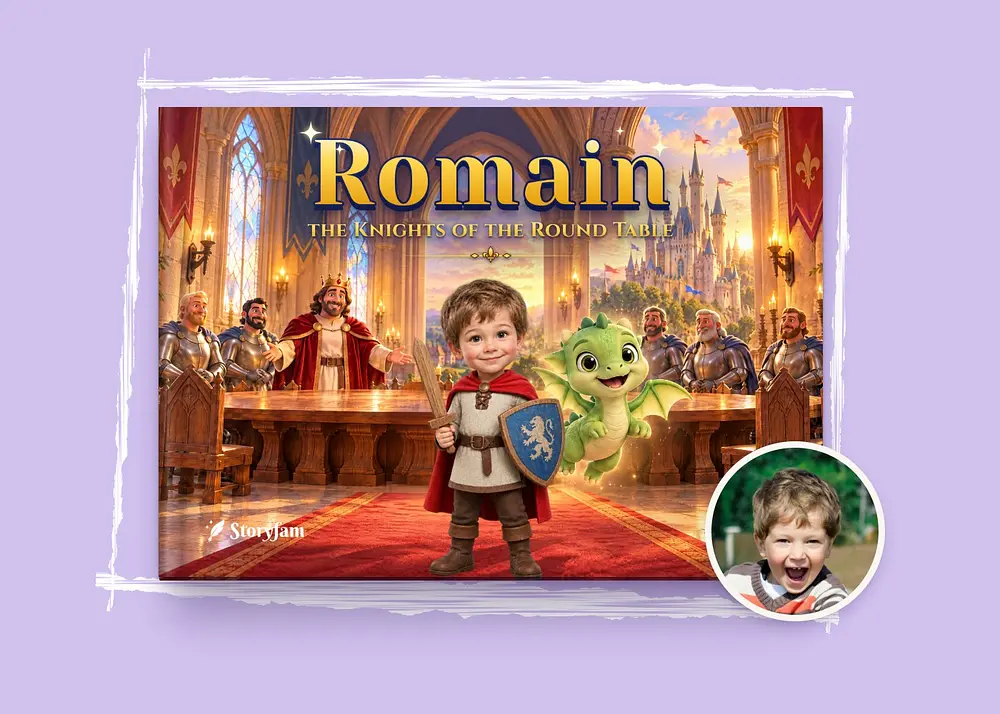

The Knights of the Round Table
A dove brings an invitation from King Arthur: your child sets off for Camelot to complete the knights’ trials, rescue a baby dragon, and earn a seat at the Round Table.
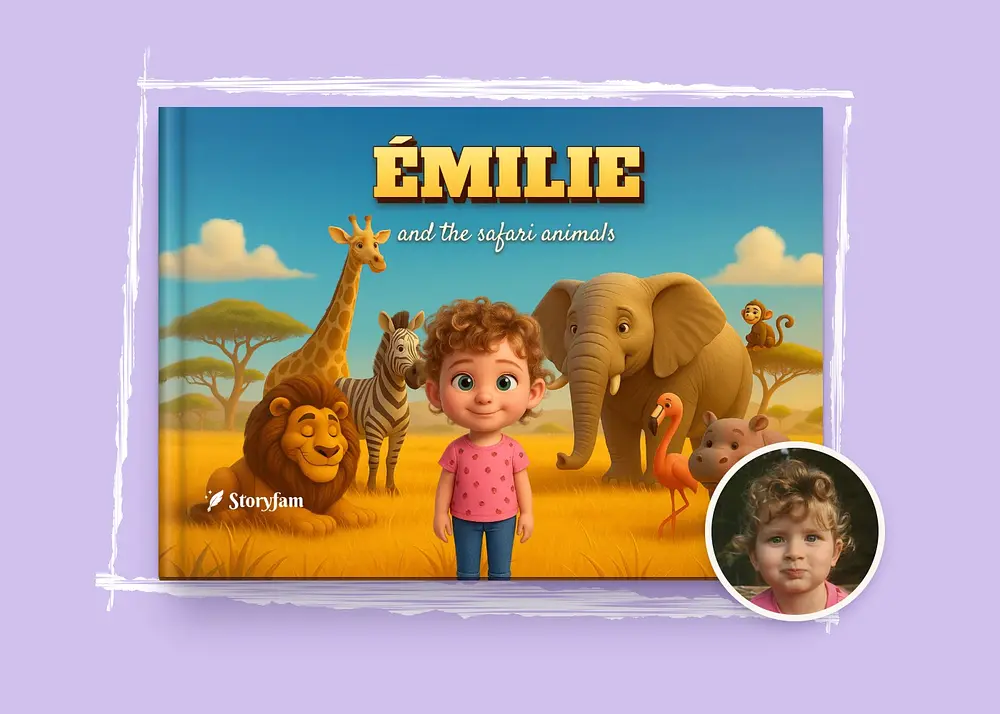
The extraordinary safari
A magical safari where your child meets 7 animals and discovers the keys to friendship through play and tenderness.
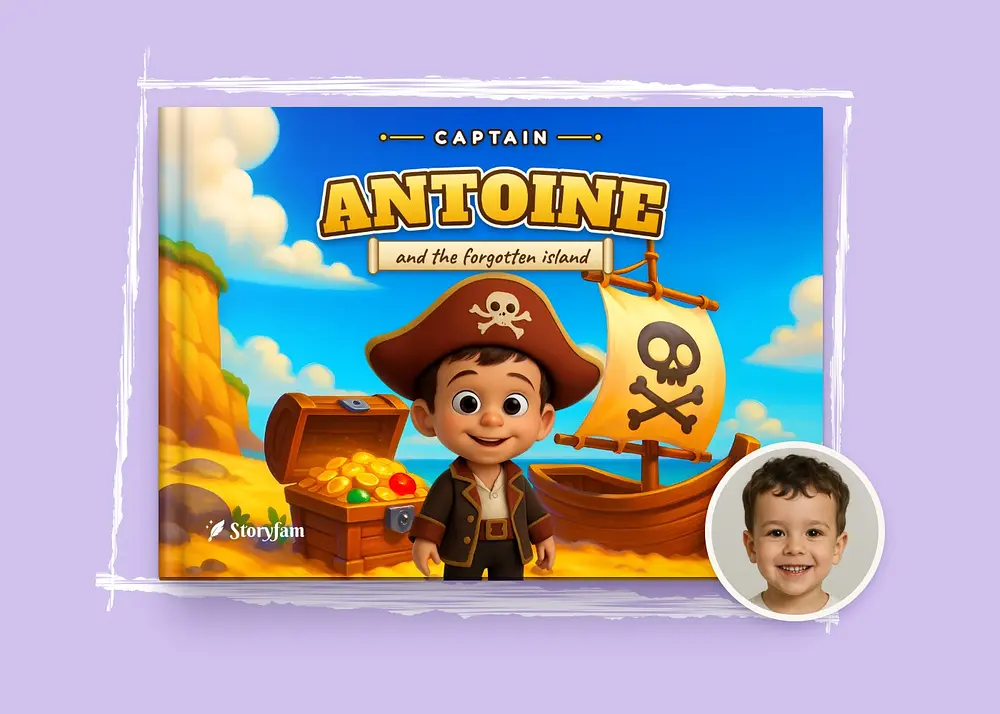
The forgotten island of pirates
A thrilling adventure on a mysterious island where pirates have hidden their treasure. Join our young hero on his quest to discover the secrets of the forgotten island.
About the author

Robeen Simeon
CEO & Founder of Storyfam — Founder of Storyfam, passionate about family reading
Robeen Simeon is the founder and CEO of Storyfam. A committed father, he founded Storyfam to help parents and grandparents pass on the love of reading to children through personalized books. He leads the editorial direction of the Storyfam blog and ensures the quality, accuracy and relevance of every article published.


